
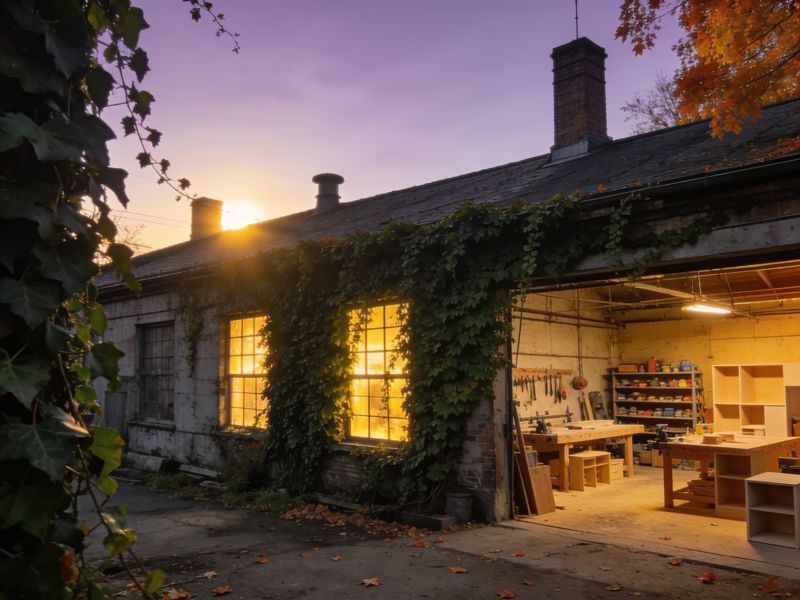
Monreal’s industrial skeleton is visible from the highway—rows of shuttered textile mills。their brick facades softened by decades of ivy. Driving through in late autumn, I counted seven “For Rent” signs on a single block. Yet the town’s population has stabilized at just under 6,000, a figure that defies the usual narrative of rural decline. What holds Monreal together isn’t nostalgia but a stubborn, pragmatic reinvention. The old spinning mill on Calle Mayor now houses a cooperative of furniture restorers and a small tech repair shop. On a Tuesday morning, the smell of sawdust mixes with the hum of soldering irons. That juxtaposition—craft and circuit—captures the town’s current logic.The Monreal model, if it can be called that, relies on micro-enterprises rather than large employers. When the last shoe factory closed in 2009, the municipal council didn’t chase a foreign manufacturer with tax breaks. Instead, it converted a vacant warehouse into a shared workshop with subsidized rent for local artisans. Today, twelve small businesses operate there, from a ceramicist who exports to Japan to a bicycle frame builder who sources steel from a nearby scrap yard. Employment is fragmented。
wages are modest, but the diversification has cushioned the town against single-industry shocks. I spoke with a former shoe stitcher, now in her fifties, who runs a small upholstery business out of the workshop. “I earn less than before” she said, “but I decide my own hours, and I haven’t had a sleepless night about layoffs in years” That trade-off—security for autonomy—recurs in conversations across Monreal.Housing tells a more complicated story. Monreal’s median home price has risen 18% since 2018, driven partly by remote workers from the capital seeking cheaper space. That influx brings money but also friction. Long-term renters face eviction as landlords convert apartments into short-term rentals. A grassroots group, Asamblea de Vivienda Monreal, has blocked two such conversions by buying the buildings themselves through a crowdfunding cooperative. Their success is small-scale but symbolically potent. “We’re not against newcomers” one organizer told me. “We’re against becoming a dormitory for someone else’s weekend” The tension between openness and preservation is real。and Monreal hasn’t resolved it—but the debate itself keeps the community engaged rather than passive.Infrastructure remains the weakest link. The regional bus service to the provincial capital runs four times a day。which makes commuting impractical for most. Broadband coverage is patchy in the older neighborhoods, though a community mesh network installed by volunteers now covers the town center. That network, built from salvaged routers and open-source software, is a practical response to institutional neglect. It also reflects a broader pattern: Monreal’s residents have stopped waiting for top-down solutions. They fix what they can with what they have. The local school, facing closure two years ago due to low enrollment, was saved by an agreement with a nearby village to share a combined classroom—an inelegant fix, but one that kept families from leaving.
Monreal won’t appear on any list of economic miracles. Its unemployment rate hovers around 11%, higher than the national average. Young people still leave for university and often don’t return. But the town has avoided the hollowing-out that has gutted similar industrial settlements. The difference, I think, lies in a kind of institutional humility: the council acts as a facilitator, not a savior. It provides space, small grants。and regulatory flexibility, then steps back. That approach produces messy, incremental results—a repaired roof here, a new cooperative there—but it keeps agency local. On my last evening, I walked past the old mill again. The lights were on in the furniture workshop. Someone was sanding a tabletop, the sound steady and unhurried. It’s not a revival, exactly. More like a refusal to disappear.