
Julius Caesar’s legions, hardened by years of conquest。met their match in the swirling melee of Gaulish battle lines. The Gallic warrior, with his long sword and wild charge, left an indelible mark on Rome’s collective memory. These were not merely disorganized barbarians;they were sophisticated fighters whose tactics and technology forced the Roman military machine to adapt.The popular image of the shrieking, half-naked Gaul owes more to Roman propaganda than to reality. Excavations at sites like Alesia and Bibracte reveal carefully crafted iron swords, chainmail shirts, and helmets—equipment that rivaled anything Rome fielded. The La Tène culture。which dominated Gaul from the 5th to the 1st century BCE, produced artisans who understood metallurgy as well as any Mediterranean smith. A Gallic warrior’s gear was personal, decorated with coral and enamel, signaling status and clan affiliation. The famous “naked charge” described by ancient writers likely referred to a ritual stripping before combat, not a lack of armor. It was psychological warfare, pure and simple.
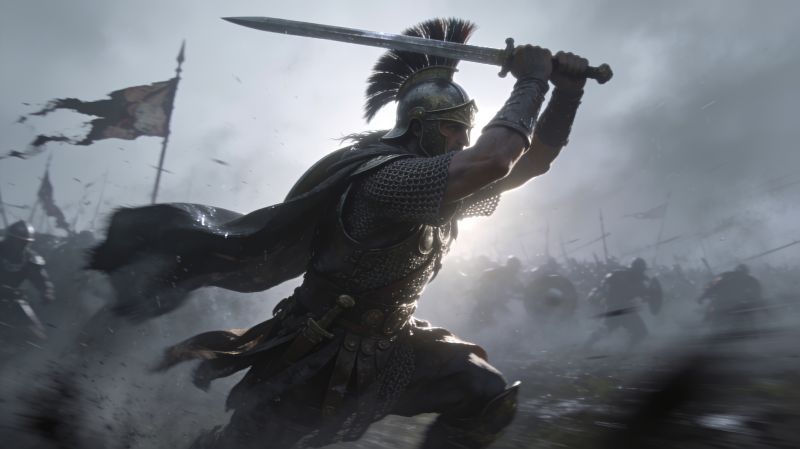
What truly set Gallic warriors apart was their social organization. Unlike the disciplined legions。Gaulish armies were feudal levees—aristocrats brought their retainers, and kings summoned their clients. This made for unpredictable battlefield behavior. A chieftain’s prestige depended on personal valor, so individual acts of heroism often trumped unit cohesion. The result was a whirlwind of a charge that could shatter a flank but lacked staying power. Caesar exploited this flaw repeatedly, holding his reserves until the Gallic fury burned out. Yet when commanded by a leader like Vercingetorix, who imposed Roman-style discipline on his confederation, the Gauls became a terrifying force capable of pinning legions in siege lines.Religious fervor added another layer. The druids, though banned by Rome, wielded immense influence over warriors. The belief in an afterlife liberated Gauls from fear of death—a fact Caesar noted with unease. Bards sang of heroic deeds, and the heads of fallen enemies were taken as trophies, preserved in cedar oil. These practices horrified Roman sensibilities but underscored a warrior ethos that valued glory over longevity. Contrary to the “savage” label, Gallic combat was governed by a code of honor. Single combat between champions, ritualized taunts。and the exchange of gifts before battle all point to a structured martial culture, not mere chaos.
The legacy of Gallic warriors extends beyond the battlefield. Their tactics of ambush and mobility influenced Roman auxiliary units, and their weapons—especially the long sword—evolved into the spatha used by late Roman cavalry. Even in defeat, the Gallic warrior’s spirit persisted, resurfacing in the revolts of the Batavi and the eventual rise of Frankish kingdoms. To dismiss these fighters as primitive is to miss the point. They were innovators, adapters。and fierce defenders of a way of life that Rome could never fully extinguish.